

We are in the heart of the country – ideal for transporting goods, cargo and supporting the environment
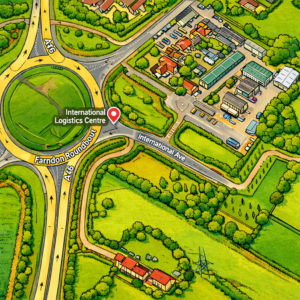
International Logistics Centre is at the centre of the transportation network
Our site is on an historically important place on the River Trent and the Fosse Way (A46). In AD 47 when the Romans were invading Britain, they realised that this area would be vital and built a major road so that they could move their supplies and goods quickly across the country. This road, the Fosse Way, has been of great importance ever since, and is the perfect place for International Logistics.
However, the connection between Newark-on-Trent and the Fosse Way, goes further back to the Palaeolithic era or Old Stone age, the earliest known time of human technological and cultural development and when man began making and using simple tools. We are at what would have been the most southerly point of any Ice Age in England (it reached Hornchurch in Essex). The legacy of that great freeze over two million years ago – the most severe and extensive ice age our country has ever seen – is in the earth beneath our feet. During excavations to improve the A46, construction workers discovered a higher than normal level of gravel in the earth. This was investigated and found to be the result of sheets of ice shifting. The movement caused small pieces of rock to form (gravel). This important archaeological site at Farndon Fields is very close to our site and unique to the country. A very special fact indeed!
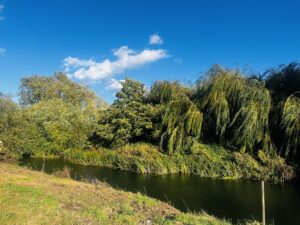
Our beautiful green area
International Export Packing is aware that we produce a lot of carbon which traps heat in the environment and drives harmful global warming. Protecting the environment is close to our founder’s heart and at odds with a business that transports cargo over huge distances using vast quantities of fuel. In an effort to offset this, we put in a number of measures. We are prioritising bio-diversity on our site and building on our historical importance as a major trading route that can be traced back 13,000 years. In addition to the five acres which we use for our business, we have six acres which are dedicated to agriculture and biodiversity. Here we have a woodland area and in 2021, with the Research and Development programme and on the advice of the University of Derby, we planted a wide range of plants to attract insects to our site for pollination. The insects attract many species of birds who feast on them and then drop seeds. These germinate and grow into more plants, shrubs and trees and continue the growing cycle. We have also replaced concrete security blocks with planters creating a dual use for them that benefits us and the environment, and put in a variety of other bio-diversified measures, all unique and a UK first for a busy commercial, HGV carbon-producing centre.
Within just a few years, what was once a crop-farmed area is now diverse and naturalised, attracting wildlife, offsetting our carbon production and enhancing our site.
The bee population in the UK has suffered badly in recent years as a result of disease, adverse weather and climate change. Our green woodland area provides the bees with a tranquil space and plenty of unpolluted wild flowers and plants, free from pesticides, where they can collect the necessary pollen and nectar for food and to make their honey. As part of our bio-diversity drive, we have created space for beehives. A local family, the Oglesbees, are trained beekeepers and look after the bees and their 125 hives. The bees travel up to five miles away and are currently producing honey from a diet consisting of our wild plants and flowers and mustard seed. Each hive produces around 20 kilos of honey every year, which equates to about 20 jars per hive. This liquid gold is sold as Oglesbees honey in local cafes and garden centres, tastes great and is perfect for including in your diet as a sweet treat and a winter boost for your immune system.
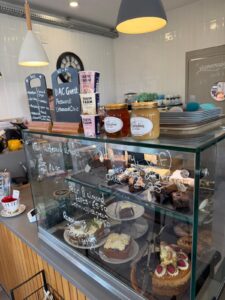
Oglesbees honey in Gannets
We are very proud of it!